


Takeaways
- Community health workers (CHWs) offer an evidence-based solution to critical challenges affecting children’s health by providing social service referrals, multi-generational family support, preventive care, early intervention, and care coordination.
- With Medicaid support, health systems can develop and sustain innovative pediatric models that incorporate CHWs to deliver high-quality, family-centered care. These models can also help address workforce shortages and access barriers for children and their families.
- This brief highlights the impact of CHWs on improving child health outcomes, shares examples of evidence-based CHW models supporting children, and explores opportunities for Medicaid to strengthen pediatric care through CHW integration.
When children’s health needs are met, they are more likely to have better health outcomes, higher educational attainment, and greater financial security as adults.1 Early childhood and adolescence are critical windows for prevention — a time to foster healthy habits, identify chronic diseases, and equip children with lifelong tools to manage their health. As chronic conditions among children continue to rise — including often preventable diseases — access to high-quality, family-centered care is critical to ensure long-term health and well-being.2
Unlike adult care, which typically focuses on the individual, pediatric care requires a collaborative and supportive approach that respects the decision-making role of parents and caregivers, while holistically considering the needs of the entire family.3 One promising strategy to enhance the health and well-being of children and adolescents is the integration of expanded care teams — particularly the inclusion of community health workers (CHWs) — into pediatric settings.4 CHWs have been shown to increase attendance at well-child visits, improve parental experiences with care, reduce emergency department visits, and play a critical role in supporting the integration of CHWs into pediatric care to improve outcomes for children and families.5,6
This brief, developed with support from the Robert Wood Johnson Foundation, highlights the impact of CHWs on improving child health outcomes, offers evidence-based examples of CHW models supporting children and their families, and explores how Medicaid can support enhancements in pediatric care through CHW integration.
Community Health Workers Impact on Children’s Health
Sometimes called promotores, peer navigators, or health representatives, CHWs are trusted members of the community who provide support services and share information related to health and well-being.7 As such, they are uniquely positioned to address critical challenges concerning the health of children.
CHWs are not confined to working within a clinic’s walls — they work in homes, schools, and community settings to help make preventive and health care services more accessible.8 This is especially important for families who face barriers to accessing care. CHWs offer holistic support to children and their families by connecting them with health care providers and social services; providing care coordination services for families, especially for those with complex health care needs; and offering support to address families’ health-related social needs, including food and housing insecurity. Due to their deep-rooted connections within the communities they serve, CHWs are frequently regarded as trusted sources of information by families.9 They play a critical role in sharing knowledge related to preventive health practices, available health care services, and community-based resources, including peer-support networks and skill-building initiatives.
In recent years, federal and state funding streams from the COVID-19 public health emergency supported the growth of the CHW workforce across the country.10 A significant number of states have mechanisms for Medicaid to cover CHW services.11 While these initiatives are often centered on services for adults, child health stakeholders can consider the mechanisms used to sustainably fund CHW services for pediatric populations.
Examples of Policy Levers to Support and Sustain CHWs
As of June 2025, over half of all states provide reimbursement for CHW services through Medicaid state plan amendments (SPAs), 1115 demonstration waivers, and/or managed care contractual requirements. States select pathways for reimbursement depending on their goals, timeline, and administrative capacity — and some states combine multiple levers.12,13
Additionally, many states have established training requirements for CHW certification, which may be administered by state agencies, independent credentialing boards, or state CHW associations.14,15 Medicaid and other CHW financing streams may require specific training to be eligible for reimbursement. CHCS analysis found 16 state examples of states with pediatric-focused CHW policies related to Medicaid reimbursement, pediatric-specific CHW services, or child specific competencies for CHW certification.
Below are examples of how state policies have supported integrating CHWs into pediatric care. These examples are followed by a map (see below) that showcases what states support Medicaid reimbursable CHW services for pediatric and postpartum populations, embed child-specific skills into the core competencies for receiving CHW certification, or offer child-specific additional training/continuing education.
- Training and Certification Requirements: Some states may not have child-specific CHW programs covered by Medicaid, but may still have child-specific competencies for receiving CHW certification (like Nevada and North Carolina). Additionally, some states (Oklahoma and Arkansas) may have child-specific programs, but do not have child-specific competencies required for certification. (See appendix below). In Arkansas, SB 51 appropriated almost $7 million to the UAMS Institute for Community Health Innovation Center, which partners with clinical sites to train CHWs on patient advocacy for improving pediatric care.16,17
- State Plan Amendments (SPA): The most common method of Medicaid coverage for CHW services is via a SPA.18 Under a SPA, states may define what populations are eligible to receive CHW services and define the certification and training requirements to be a Medicaid reimbursable provider. New York’s SPA has broad eligibility for populations to receive CHW services, including all pregnant and postpartum women as well as children under 21 years of age.19 In Kentucky’s SPA, CHW services include health promotion and coaching for pregnant women and infant care.20 In Washington State, the SPA authorizes CHW services for adults and children and defines one eligibility pathway to receive CHW services as a positive adverse childhood experiences screening.21 This SPA was built off an earlier pilot in 2022, in which Washington State’s legislature directed its Medicaid agency to provide grant funding to facilitate the integration of CHWs into pediatric primary care clinics. The state reported on the strengths and successes of this program and proposed a SPA to sustain and scale up access to these CHW services.22
- 1115 Waivers: Compared to SPAs, 1115 waivers provide states with more flexibility to waive federal Medicaid rules to test innovative approaches.23 Arkansas’ 1115 waiver supports CHW workforce development under its Life360 HOME program, which offers intensive support for eligible populations, including high-risk pregnant women and new moms and babies.24 Additionally, some states cover CHW services to meet certain requirements of the Consolidated Appropriations Act of 2023.25 For example, Pennsylvania, California, Maryland, and Illinois use CHWs to provide targeted case management and 30‑day pre-release services for justice-involved youth.26,27,28,29
See the appendix in the PDF.
Medicaid CHW Coverage for Pediatric and Postpartum Populations
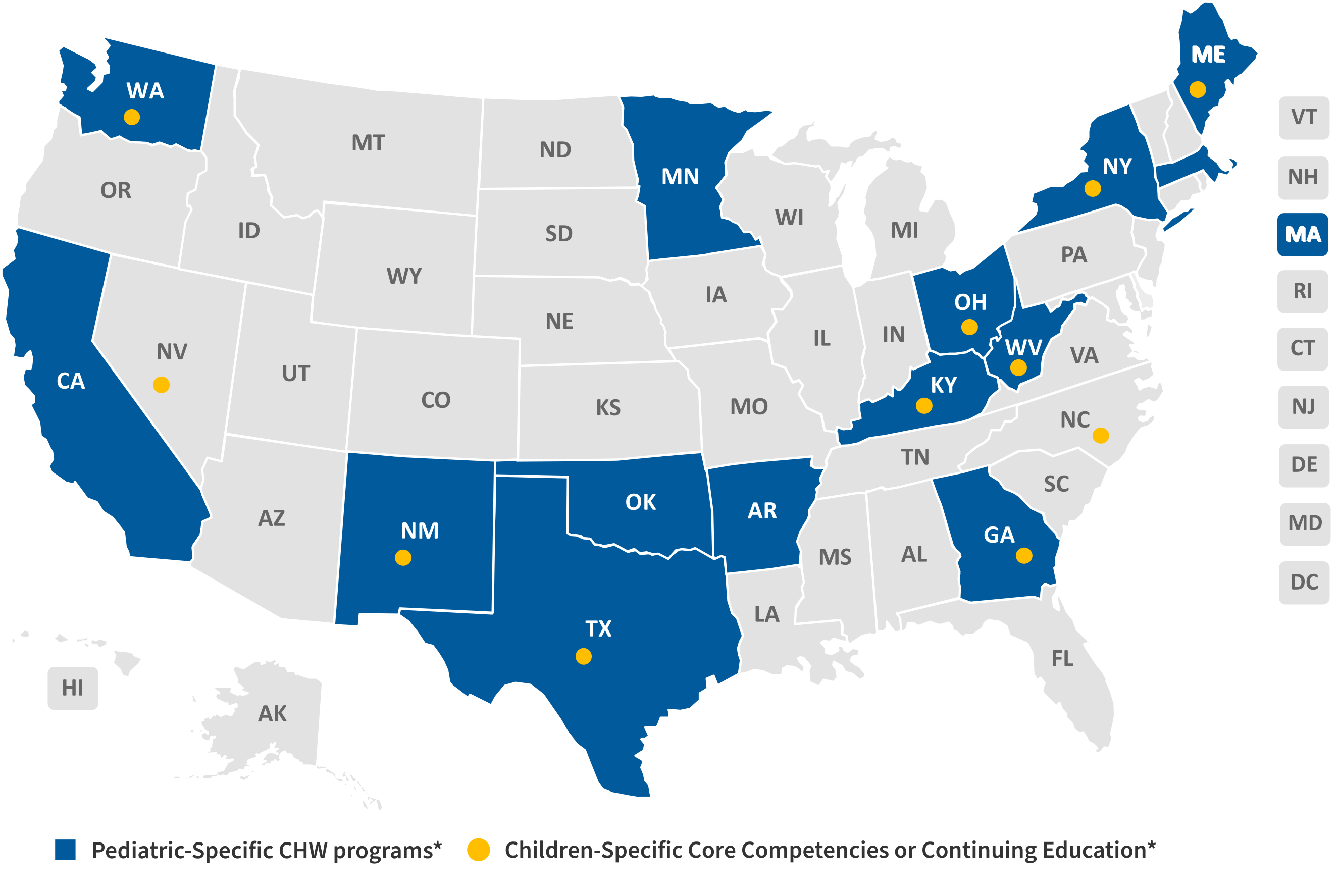
*Pediatric-Specific CHW programs: State-supported and Medicaid reimbursable programs that focus on serving children, post‑partum mothers and infants, or adolescents.
*Children-Specific Core Competencies or Continuing Education: States that have child-specific CHW certification requirements or offer Continuing Education credits or additional training focused on pediatric populations.
CHWs in Action
CHWs can engage with pediatric populations in multiple capacities, including supporting preventive health initiatives, assisting families in caring for children with complex medical needs, linking to health-related social services, and delivering services in community-based settings beyond traditional clinical and hospital environments. This section shares innovative models of CHWs improving care for children and their families.
Supporting Prevention Efforts
Prevention efforts, such as screening, health education, and immunization, are essential for the health and well-being of children. CHWs play a pivotal role in facilitating access to these essential services by engaging families and connecting them with appropriate resources. Below are examples of CHW programs designed to ensure children and families have access to services early and often.
- The UpSTART Community Programs at Texas Children’s Hospital in Houstonoffer a range of services to promote children’s early brain and language development, provide individual and group support for maternal mental health, offer home visitation services, and facilitate family skill-building workshops and connections to community resources.30 CHWs play a vital role in helping address families’ challenges, such as housing instability, food insecurity, and financial stress. CHWs also help families apply for programs like Medicaid, WIC, and SNAP, while providing direct support for necessities such as diapers, clothing, and transportation. CHWs offer caregiver education to support children’s development, including early brain and language development, positive parenting and emotional regulation, and support for language or developmental delay.
- The BLOOM: Black Baby Equity Clinic, in San Franscisco, California, specializes in providing culturally concordant care to Black mothers and their babies up to age three.31 CHWs work alongside a multidisciplinary team of providers offering support within the mother-baby dyad. The multidisciplinary approach gives families time to express their concerns and allows the clinic to address their needs during an appointment rather than requiring a follow-up or referral. Due to this approach, the clinic has seen a reduction in missed appointments for the mothers and babies they serve.32
Caring for Children with Medical Complexities
Pediatric clinicians often face significant time constraints when seeing patients, making it difficult to provide comprehensive, family-centered care, especially for children with more complex needs. CHWs can provide additional support to children with medical complexities, including chronic conditions. Below are examples of CHW programs focused on providing care for children with chronic conditions.
- Children’s Hospital of Philadelphia (CHOP), in Pennsylvania, piloted a program that uses CHWs to support parents of children with medical and social complexities during the critical 90 days following their child’s discharge from the hospital.33 This period can be particularly challenging for families, as they are often required to navigate multiple health care services while also addressing significant social needs, such as transportation, housing, and financial instability. CHWs meet with families before they are discharged and aim to connect at least weekly post-discharge by phone, text message, or virtual visits. Families may also choose to have a CHW home visit or meet with CHWs at the CHOP campus during follow-up appointments.
- The ADOBE Program in Albuquerque, New Mexico, provides wrap-around services for justice-involved youth.34 CHWs work alongside education specialists, behavioral health professionals, trauma-informed primary care providers, and medical-legal experts to help meet the needs of youth and their families, which can lower the risk of youth re-entering the criminal justice system. CHWs work with youth while they are detained to build trust and encourage engagement in care post-release. Post-release, CHWs assist with housing, food, utilities, social services, extracurricular activities, and job readiness.
- The Pediatric Community Health Worker program offered throughout New York State was developed in partnership with community-based organizations (CBOs) to better serve families of children with special health care needs who receive services at local pediatric patient-centered medical homes (PCMH).35 CHWs are based within the CBOs, allowing them to remain in the community while working closely with clinical care teams to support children and their families. Serving as the single point of contact for families, CHWs empower families around self-management for their child’s condition, provide care coordination, and connect them to resources in the community and the PCMH.
Offering Services Outside of Clinics and Hospitals
CHWs can provide services outside of the health care setting, facilitating access to children and their families by providing services within their communities. Below are examples of CHW programs situated in settings outside of clinics and hospitals.
- The New York State Healthy Neighborhoods Program offers home-visiting CHWs who can identify asthma triggers and assist families to modify housing conditions to improve indoor air quality, asthma symptoms, and overall health and well-being.36If necessary, CHWs help families get needed repairs for building issues that negatively impact health. Families who participate in the program experience both immediate and long-term benefits, including significant improvements to indoor air quality and a reduction in asthma triggers — resulting in fewer missed school days for children with asthma.37
- Telehealth ROCKS (Regional Outreach for Communities, Kids, and Schools) is an initiative in Missouri and Kansas that integrates trained CHWs in rural schools and offers enhanced access to behavioral health and pediatric care through telehealth.38 CHWs help coordinate care, provide culturally appropriate health education, assist students with managing behavioral health needs, and make community referrals to help address health-related social needs. The success of this program paved the way for KanAWARE, an expansion of the Telehealth ROCKs program within the pediatrics department at Kansas University School of Medicine.39 This federally funded program continues to strengthen support for children’s behavioral health needs.
- The CHW and Community Health Ambassadors program at an elementary school in Oregon supports families in school settings.40 School staff identify families who might benefit from additional support and connect them with CHWs and parent volunteers to build trusting relationships. These teams assist with tasks such as connecting families to health care providers, enrolling them in state health coverage, and linking them to social service resources.
- The Neighborhood Nursing initiative, in Baltimore, Maryland, delivers care to residents in their homes, schools, libraries, and emergency shelters through door-to-door and mobile outreach — regardless of income, insurance status, or health condition.41 Each resident is connected with a nurse and CHW team that is accessible via text or app.42 Children and families in pilot neighborhoods can opt in to annual home visits that include physical exams, vaccinations, mental health support, and early intervention for at-risk children, ultimately reducing hospitalizations and improving long-term outcomes. While the program is not child-specific, families with young children can receive more frequent and tailored resources to support their growth. In addition, children and families can receive telehealth services.
Key Considerations for Implementing CHWs in Pediatrics
There are multiple pathways available to states, health care systems, and child health advocates interested in incorporating CHWs to support the pediatric population. Below are a few considerations for states and health care systems when integrating CHWs into expanded care teams for children and families.
- Incorporate reimbursement for CHW services in Medicaid programs. States interested in investing in expanded care teams to improve care for pediatric populations can consider the variety of federal and state authorities, including SPAs, 1115 waivers, and managed care contractual requirements.43 While states may opt to start with pilots and grant-based projects to build the evidence base and create a proof of concept, offering CHW services as a Medicaid benefit can provide critical support to sustain the long-term integration of CHWs into the pediatric medical care team. For states that have already garnered CHW reimbursement authority through SPAs and 1115 waivers, managed care contracts can be a useful tool to solidify service requirements for CHWs in pediatric populations.44
- Offer additional education to CHWs working with pediatric populations.States can consider requiring child-specific competencies for CHW certification and offering Continuing Education credits or additional courses or training opportunities focused on pediatric populations. Offering a specialized track for child health may attract professionals with childcare experience to the profession. Additionally, CHWs with specialized training may be better equipped to provide support to children and their families in a variety of settings. When creating requirements to become a billable Medicaid provider, states can consider offering specific training for CHWs who plan to work with pediatric populations or can work with training entities to add specific requirements that provide the skills needed to better serve children and their families.
- Leverage CHWs in school settings. States may consider ways to leverageCHWs in school settings. CHWs can be an important resource in schools by supporting students with chronic health conditions, delivering health education, and addressing health-related social needs. Their involvement not only enhances the overall health and well-being of children but also alleviates some of the responsibilities of school administrators, counselors, and teachers — enabling them to focus more effectively on delivering high-quality education and fostering a safe, supportive learning environment.
- Engage cross-sector partners to align CHW programs. Child health advocates can engage in cross-sector collaboration to design and implement specialized CHW programs for specific pediatric populations. State agencies that serve children — such as WIC, SNAP, departments of child and family health, school health, and maternal and infant health — often support the same families and share common goals. Coordinating resources across these departments can help distribute the administrative burden of program implementation, foster efficient data-sharing systems, enhance interagency communication, and increase the likelihood of long-term program sustainability.
- Assess children and families’ needs before implementation. Health care systems interested in integrating CHWs into their pediatric setting may first consider conducting a needs assessment to better understand the unique health needs of the children and families they serve. This can include surveys, focus groups, and interviews with patients, families, and providers to identify areas where CHWs may have the greatest impact. In addition, it is important to create clear roles and responsibilities and consider how CHWs will be incorporated into the daily flow of the clinic to ensure smooth coordination and reduce areas of duplication.
Conclusion
Children and families require a child health care system that serves their unique needs and supports opportunities for life-long health and well-being. Amid growing concern over the rise in childhood chronic diseases, state Medicaid agencies and health systems are well-positioned to leverage community health workers to address the health-related social needs that contribute to the development and progression of preventable conditions.45
With their geographic and cultural proximity to the families they serve, CHWs can serve as empathetic and accessible extensions of the clinical care team. State Medicaid agencies interested in improving the health of children in their state can consider CHWs as an evidence-based solution to support the needs of children and families.
Endnotes
- Park, E., Alker, J., Corcoran A. (2020, December). Jeopardizing a Sound Investment: Why Short-Term Cuts to Medicaid Coverage During Pregnancy and Childhood Could Result in Long-Term Harm. [Issue brief]. The Commonwealth Fund. https://www.commonwealthfund.org/publications/issue-briefs/2020/dec/short-term-cuts-medicaid-long-term-harm
- The White House. (2025, February). Establishing the President’s Make America Healthy Again Commission. https://www.whitehouse.gov/presidential-actions/2025/02/establishing-the-presidents-make-america-healthy-again-commission/
- Wallis, C. (2007, June). Transition of Care in Children with Chronic Disease. BMJ. 334(7606):1231-1232. https://pmc.ncbi.nlm.nih.gov/articles/PMC1892458/
- Modica, C. Care Teams…Expanded Care Teams. [Presentation] National Association of Community Health Centers. https://www.nachc.org/wp-content/uploads/2022/04/Slides_Microlearning-Care-Teams.pdf
- Coker, T.R., Lijenquist, K., Lowry, S. (2023, April). Community Health Workers in Early Childhood Well-Child Care for Medicaid-Insured Children, A Randomized Clinical Trial. JAMA. 2023;329;(20):1757-1797. https://jamanetwork.com/journals/jama/fullarticle/2804528
- Mahin, M., Guo, J., Warner, M., Dottin, M., Olsen, N., Marshall, E.T. (2024). Projected Cost Savings of a Cost Savings of a Community Health Worker Model for Asthma Home Visits in the Massachusetts Pediatric Medicaid Population. Prev Chronic Dis. 2024;21:240028. https://www.cdc.gov/pcd/issues/2024/24_0028.htm#:~:text=better%20asthma%20control.-,Conclusion,and%20culturally%20appropriate%20asthma%20care
- American Public Health Association. (n.d.) Community Health Workers. https://www.apha.org/apha-communities/member-sections/community-health-workers
- Mahin, M., Guo, J., Warner, M., Dottin, M., Olsen, N., Marshall, E.T. (2024). Projected Cost Savings of a Cost Savings of a Community Health Worker Model for Asthma Home Visits in the Massachusetts Pediatric Medicaid Population. Prev Chronic Dis. 2024;21:240028. https://www.cdc.gov/pcd/issues/2024/24_0028.htm#:~:text=better%20asthma%20control.-,Conclusion,and%20culturally%20appropriate%20asthma%20care
- Johns Hopkins Center for Health Equity. (n.d.). Community Health Workers. https://publichealth.jhu.edu/center-for-health-equity/community-health-workers
- Kelly, L., Bartels, A., Cram, A. (2024, July). Opportunities for Public Health Agencies to Advance Sustainable Financing of Community Health Worker Programs. [Issue brief]. Center for Health Care Strategies and Association of State and Territorial Health Officials. https://www.chcs.org/resource/opportunities-for-public-health-agencies-to-advance-sustainable-financing-of-community-health-worker-programs/
- Chappel, A., Cronin, K., Kulinski, K., Whitman, A., DeLew, N., Hacker, K., Bierman, A.S., Wallack Melkir, S., Monarez, S.C., Abowd Johnson, K., Whelan, E.M, Jacobs, D., & Sommers, B.D. (2022, November). Improving Health and Well-Being Through Community Care Hubs. Health Affairs Forefront. https://www.healthaffairs.org/content/forefront/improving-health-and-well-being-through-community-care-hubs
- National Academy for State Health Policy. (2025, April). State Community Health Worker Policies. [State tracker]. https://nashp.org/state-tracker/state-community-health-worker-policies/
- Gyurina, C., Victoriano, V. (2024, January). Environmental Scan on Community Health Workers: A 50-State Scan of Medicaid Reimbursement Approaches for the CHW Workforce. [Report]. Connecticut Health Foundation. https://www.cthealth.org/wp-content/uploads/2024/01/CHW-Medicaid-Policies-and-Reimbursement-Approaches-by-State.pdf
- Association of State and Territorial Health Officials. (2024, March 19). Community health worker certification by jurisdiction. ASTHO. https://www.astho.org/topic/brief/community-health-worker-certification/[1](https://www.astho.org/topic/brief/community-health-worker-certification/)
- Kelly, L., Bartels, A., & Cram, A. (2024, July). Opportunities for public health agencies to advance sustainable financing of community health worker programs. Association of State and Territorial Health Officials. https://www.astho.org/globalassets/report/advancing-sustainable-financing-of-community-health-workers.pdf
- Institute for Community Health Innovation. (n.d.). Maternal and Child Health. University of Arkansas for Medical Sciences. https://communityhealth.uams.edu/strategic-areas/maternal-and-child-health/
- An Act for the University of Arkansas for Medical Sciences Appropriation for the 2024-2025 Fiscal Year. Act 166. https://www.arkleg.state.ar.us/Bills/Detail?id=SB51&ddBienniumSession=2023%2F2024F
- D’Alessandro, M., Higgins, E., and Wilkniss, S. (2024, August). Updates and FAQs: Developing and Implementing a Medicaid State Plan Amendment to Authorize Community Health Worker Reimbursement. [Blogpost]. National Academy for State Health Policy. https://nashp.org/updates-and-faqs-developing-and-implementing-a-medicaid-state-plan-amendment-to-authorize-community-health-worker-reimbursement/
- New York State Department of Health. (2025, May 30). Community Health Worker Services Policy Manual. eMedNY. https://www.emedny.org/ProviderManuals/CommunityHealth/PDFS/CHW_Policy_Manual.pdf
- Kentucky Cabinet for Health and Family Services, Department for Medicaid Services. (2023, March). State Plan Amendment 23-0002: Community Health Worker Services. https://www.medicaid.gov/sites/default/files/2023-03/KY-23-0002.pdf
- Washington State Health Care Authority. (2025, July 1). Community Health Worker (CHW) Services Billing Guide. https://www.hca.wa.gov/assets/billers-and-providers/community-health-workers-bg-20250701.pdf
- Washington State Health Care Authority. (2024, January). Community Health Worker Grant Report. https://www.hca.wa.gov/assets/billers-and-providers/community-health-worker-grant-report-2024.pdf
- Finisse, V., Hluchan, M. (2024, July). Leveraging Medicaid to Support Community Health Workers. [Issue brief]. ASTHO and Center for Health Care Strategies. https://www.astho.org/topic/brief/leveraging-medicaid-to-support-community-health-workers/
- Centers for Medicare & Medicaid Services. (2025, January 17). Arkansas Section 1115 demonstration: Special terms and conditions with Life360 HOME evaluation design. U.S. Department of Health and Human Services. https://www.medicaid.gov/medicaid/section-1115-demonstrations/downloads/ar-stcs-with-life360-home-evaluation-design01172025.pdf
- Gelber, E., Buck, L., Goyal-Carkeek, R., Kissi, J. (2024, September). New Medicaid Opportunities to Support Youth Leaving Incarceration: Building Community Well-Being and Advancing Prevention Efforts. [Issue Brief]. Center for Health Care Strategies. https://www.chcs.org/resource/new-medicaid-opportunities-to-support-youth-leaving-incarceration-building-community-well-being-and-advancing-prevention-efforts/
- Centers for Medicare & Medicaid Services. (2024, December). Commonwealth of Pennsylvania’s Keystones of Health section 1115(a) demonstration. U.S. Department of Health and Human Services. https://www.medicaid.gov/medicaid/section-1115-demonstrations/downloads/pa-keystones-of-health-dmntn-aprvl-atchmnt-12302024.pdf
- Centers for Medicare & Medicaid Services. (2025, January). California Advancing and Innovating Medi-Cal (CalAIM) Section 1115(a) demonstration. U.S. Department of Health and Human Services. https://www.medicaid.gov/medicaid/section-1115-demonstrations/downloads/ca-calaim-dmnstrn-appvl-thncl-crctn-atchmnt-c-aa-01172025.pdf
- Centers for Medicare & Medicaid Services. (2025, January). Maryland HealthChoice section 1115(a) demonstration. U.S. Department of Health and Human Services. https://www.medicaid.gov/medicaid/section-1115-demonstrations/downloads/md-healthchoice-appvl-01132025.pdf
- Illinois Department of Healthcare and Family Services. (2024, July 2). Illinois Healthcare Transformation Section 1115 Demonstration approval letter. https://hfs.illinois.gov/content/dam/soi/en/web/hfs/sitecollectiondocuments/ilhealthcaretransappvl07022024.pdf
- Texas Children’s Hospital. (2024, December). upstart Community Programs: Pioneering Early Childhood Health Programs that Make a Difference. [Blogpost]. https://www.texaschildrenspeople.org/upstart-community-programs/
- UCSF Benioff Children’s Hospitals Foundation. (n.d.). Black babies who BLOOM. UCSF Benioff Children’s Hospitals. Retrieved July 29, 2025, from https://give.ucsfbenioffchildrens.org/stories/bloom-black-baby-equity-clinic
- University of California San Francisco Department of Pediatrics. (2024, September). BLOOM: A Health Equity Clinic Bridging Gaps in Care for Black Children and Families. [Blogpost]. https://pediatrics.ucsf.edu/news/bloom-health-equity-clinic-bridging-gaps-care-black-children-and-families
- National Institute of Health RePORTER. (2023). Family-Centered Community Health Worker Support for Children with Chronic Conditions and Unmet Social Needs. https://reporter.nih.gov/search/lhPi-1fEiEe-aMJewb8gQg/project-details/10805946
- Family Community Medicine. (n.d.) ADOBE Program. University of New Mexico School of Medicine. https://hsc.unm.edu/medicine/departments/family-community/clinical-practice/adobe/
- Center for Community Health Navigation. (n.d.). Pediatric Community Health Worker Program. New York-Presbyterian. https://www.nyp.org/acn/community-programs/center-community-health-navigation/our-work
- NYC Health. (n.d.). NYC Healthy Neighborhoods Programs: Home Assessments of Asthma Triggers. https://www.nyc.gov/site/doh/health/health-topics/healthy-neighborhoods-asthma-triggers.page
- Gomez, M., Reddy, A. L., Dixon, S. L., Wilson, J., & Jacobs, D. E. (2017). A Cost-Benefit Analysis of a State-Funded Healthy Homes Program for Residents With Asthma: Findings From the New York State Healthy Neighborhoods Program. Journal of public health management and practice : JPHMP, 23(2), 229–238. https://doi.org/10.1097/PHH.0000000000000528
- Telehealth ROCKS. (n.d.). Telehealth ROCKS. https://www.telehealthrocks.org
- University of Kansas Medical Center. (n.d.). KUMC receives $9 million federal grant to expand mental health services in Kansas. https://www.kumc.edu/about/news/news-archive/kanaware-grant-samhsa.html
- Riddle, K. (2020). Transforming schools: Community health workers in action. Children’s Institute. https://childinst.org/wp-content/uploads/2020/10/FINAL-CHW2020.pdf
- Johns Hopkins School of Nursing. (n.d.). Neighborhood Nursing. https://nursing.jhu.edu/faculty-research/research/areas-of-expertise/community-global-health/center-community-innovation-scholarship/neighborhood-nursing/
- Johns Hopkins School of Nursing. (2023, October). For Neighborhood Nursing, a known commodity. https://nursing.jhu.edu/magazine/articles/2023/10/for-neighborhood-nursing-a-known-commodity/
- Rush , C., & Mason, T. (2023). Sustainable financing of community health worker employment: Key options for states to consider. https://doi.org/https://chwcentral.org/wp-content/uploads/sustainable-financing-of-community-health-worker-employment.pdf
- Finisse, V., Hluchan, M. (2024, July). Leveraging Medicaid to Support Community Health Workers. [Issue brief]. ASTHO and Center for Health Care Strategies. https://www.astho.org/topic/brief/leveraging-medicaid-to-support-community-health-workers/
- The White House. (2025, February). Establishing the President’s Make America Healthy Again Commission. https://www.whitehouse.gov/presidential-actions/2025/02/establishing-the-presidents-make-america-healthy-again-commission/