


Kentucky Key Facts
State Population: 4.5 million
Medicaid Enrollees: 1.4 million
Enrollees with Diabetes: 176,000
Medicaid Spending on Diabetes: $219.7 million
Understanding how diabetes impacts Medicaid members’ health and well-being is key to effectively designing policies and crafting strategies to better support them. Kentucky, through a partnership between its Department for Medicaid Services and Department of Public Health, leveraged diabetes data to do just that.
As participants in the Continuous Glucose Monitor (CGM) Access Accelerator, the two agencies partnered to implement key strategies to increase Medicaid enrollee access to CGMs — wearable devices that provide real-time tracking of blood glucose levels. Although CGMs are widely recognized as a standard of care for adults managing diabetes, access to CGMs for Medicaid members varies widely across states.
This profile highlights how Kentucky — through a data-driven, collaborative approach — updated its Medicaid CGM policy and targeted outreach and resources to members and providers to increase the use of CGMs and other diabetes-related supports.
Accelerating CGM Access in Medicaid: State Innovations
CGMs are the standard of care for people with insulin-treated diabetes. Yet, despite most states offering some level of CGM coverage through Medicaid, policies are inconsistent nationwide, which can limit access to these life-changing devices. This profile is part of a series highlighting state innovations for expanding access to CGMs in Medicaid. The series is a product of CGM Access Accelerator, a technical assistance and peer learning initiative that is working with Medicaid agencies in seven states — Iowa, Kentucky, Michigan, New Jersey, Oklahoma, South Dakota, and Texas — to expand access to CGMs through Medicaid. The initiative is led by the Center for Health Care Strategies (CHCS) through support from The Leona M. and Harry B. Helmsley Charitable Trust. LEARN MORE »
Expanding CGM Coverage to Meet Member Needs
In 2024, Kentucky Medicaid expanded its clinical eligibility requirements for CGMs to include coverage for members with gestational diabetes — regardless of insulin dependence — and for members with type 2 diabetes who are not on insulin but have a history of problematic hypoglycemia, a condition marked by abnormally low blood glucose levels. Prior to this change, CGM eligibility in Kentucky was limited to members with type 1, insulin-requiring type 2, or insulin-requiring gestational diabetes. Kentucky made this change following a data review of diagnoses that could benefit from CGM use, which identified low use among members with gestational diabetes and in specific geographies. The policy change led to an increase in CGM utilization among members. Among those with gestational diabetes, providers prescribed seven CGMs in the first half of 2024; following the policy change, that number rose to 67 CGMs in the second half of the year.
To further support access for Medicaid members, CGMs can now be provided under their pharmacy benefit or through durable medical equipment coverage following a 2024 policy update. Previously, Kentucky established a single pharmacy benefit manager and preferred drug list across all Medicaid managed care organizations (MCOs) in 2021. Updating the policy to include CGMs as a pharmacy benefit simplified the prescribing and dispensing process for providers. By implementing a single pharmacy benefit manager, Kentucky further eased the process for obtaining CGMs, and by subsequently expanding the eligibility, more populations can benefit from access to the device.
Outreach to Members and Providers to Increase Impact
Kentucky wanted to better understand provider behavior around prescribing CGMs in areas with high diabetes prevalence. To do this, they used funding provided through the CGM Access Accelerator to work with an external vendor to design and conduct a statewide provider survey. The 663 respondents, mostly nurse practitioners, shared that they have: (1) strong interest in partnering with certified diabetes care and education specialists (CDCES); (2) mixed preferences and experiences with prescribing CGMs directly versus referring out to endocrinologists; and (3) high confidence in helping patients interpret CGM data, noting that hard copy materials remain the most common method for sharing information with patients.
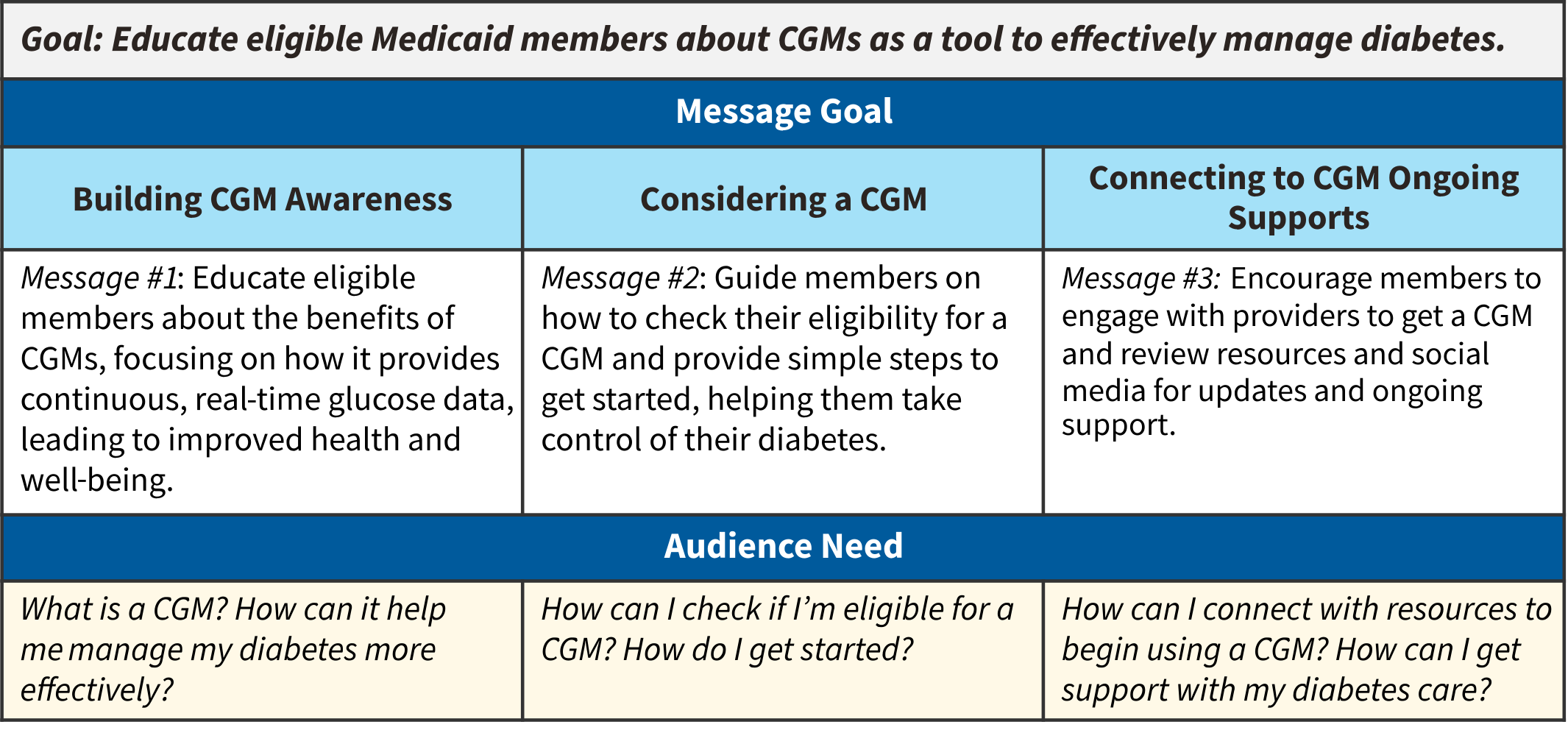
In addition to their participation in the CGM Access Accelerator, Kentucky joined CHCS’ Medicaid Innovation Collaborative, during which they collected stories from members on CGM use. Based on these stories, as well as findings from the survey and an analysis of CGM utilization data, Kentucky developed educational materials and launched targeted email campaigns to inform Medicaid members and providers about CGMs. This tiered outreach campaign focused on different stages of readiness around CGM use — from knowledge building to long-term success. Kentucky targeted Medicaid members who might benefit from the use of a CGM device, as well as their providers. The state used a multi-prong approach to engagement, including email outreach, leave-behind materials, and a social media campaign. These efforts were designed to meet the needs of members and providers, with messaging tailored for each audience. The following tables describe the campaign’s strategy to support CGM adoption across audiences.
Medicaid Member Campaign Strategy
Provider Campaign Strategy
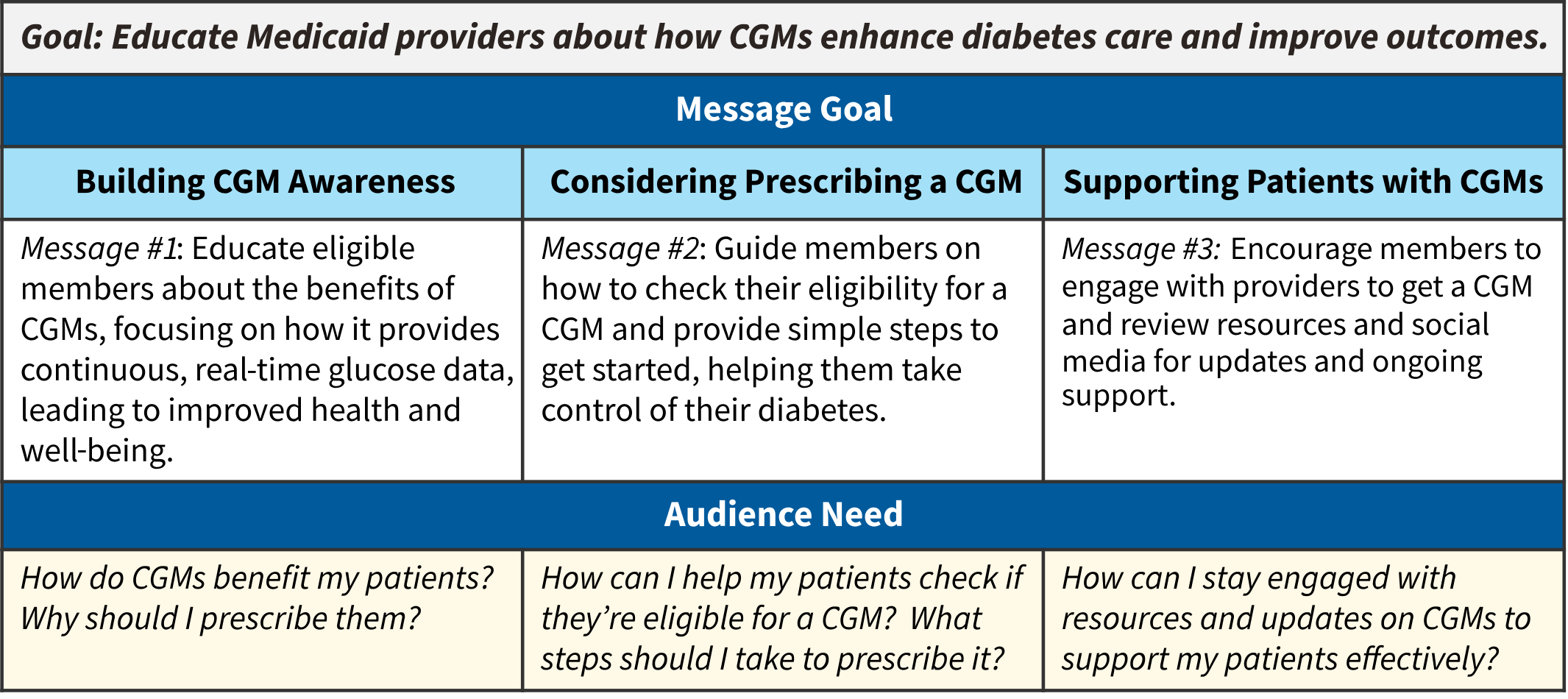
The two campaigns reached current social media and email subscribers with a combined engagement rate of 35 percent — a strong result. Kentucky expects this engagement to increase as new subscribers join their social media and email channels and more resources are shared. To support access and information needs, the team also created centralized resource pages for members and providers, including CGM 101 materials, diabetes prevention and management tips, MCO coverage details, and community-based resource links and referral tools.
Cross-Agency Partnership
Kentucky’s successful outreach and engagement efforts are due in part to a strong partnership between the Department for Medicaid Services and the Department of Public Health. Prior to the CGM Access Accelerator, this collaboration was limited to the development of cabinet-level projects, such as the bi-annual state diabetes report card. It has since grown to reflect a full partnership on all diabetes-related efforts within the state. The two agencies participate in monthly coordination meetings, supported by the CGM Access Accelerator. These meetings began with a shared vision to expand access to diabetes self-management education and support (DSMES) services by adding CDCES as a recognized provider type under Medicaid. The Kentucky Diabetes Prevention and Control Program — the state’s DSMES/National Diabetes Prevention Program model — aims to equip Kentuckians with the tools to prevent and manage diabetes, including CGM education and support.
Over time, the monthly partnership meeting has evolved to address other current diabetes priority areas, including: (1) identifying emerging needs and gaps in care; (2) exploring new ways to connect Medicaid members with community-based supports and resources; (3) sharing information across state agencies; and (4) creating opportunities to partner with community stakeholders (e.g., providers, community-based organizations). Kentucky plans to use future meetings to review utilization of the state’s medical nutrition therapy benefit and explore opportunities to align this treatment with CGM use.
What’s Next for Kentucky?
Kentucky continues to explore different approaches to member outreach and engagement, including using Kynect Resources, the state’s 211-style platform, to further their reach and increase member access to CGMs and related diabetes support. The state is also exploring opportunities to better support individuals with diabetes who are dually eligible for Medicare and Medicaid.
Additionally, the team is seeking opportunities to partner with its MCOs to increase impact. For instance, in 2024, the state included an A1c control quality measure for MCOs. As this work progresses, the Kentucky Department for Medicaid Services and Department of Public Health remain committed to their cross-agency partnership and to identifying new opportunities to improve health outcomes for Medicaid members with diabetes.